
2026 Washington State Legislative Session Recap
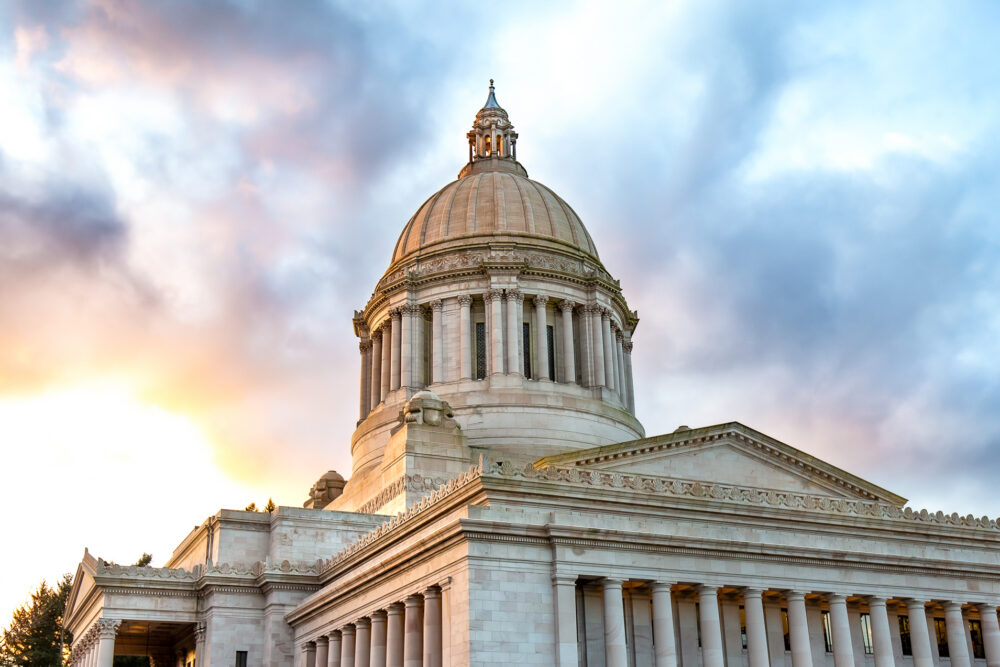
Photo: The Washington State Capitol Building in Olympia. Photo courtesy of the Washington State Capitol Campus.
By Chris Moore, Executive Director
As an off-budget year (meaning: not a year where the biennial state budget is set, as 2025 was), 2026 was billed as a “short legislative session.” But try telling that to members of the legislature, as the House nearly set a record for more than 24 hours of floor debate on the Millionaires’ Tax. This legislation largely sums up the session overall, as legislators worked to reform the state’s tax system while addressing ongoing budget deficits. Not all in the legislature agreed on the best path forward, as the bill establishing the Millionaires’ Tax witnessed a handful of Democrats joining all the Republicans in opposing the measure. What is agreed on is that the debate and work to move this legislation took up most of the energy in the 60-day session.
Thankfully, despite ongoing budget challenges, small agencies were left largely untouched. The Washington State Department of Archaeology & Historic Preservation (DAHP), the agency which houses the Washington State Main Street Program (operated by the Washington Trust under contract), kept maintenance-level funding. In addition to Main Street, DAHP is responsible for implementing critical historic preservation programs at the state and federal levels, including the National Register of Historic Places and Historic Tax Credit Programs; it also provides key review of projects with the potential to impact historic resources. The Washington State Historical Society, which manages the Heritage Capital Projects Grant Program and provides vital funding for local historic preservation projects, also saw little impact. We are grateful to the legislature for their understanding that small, heritage-based agencies simply can no longer absorb cuts and be expected to implement their statutorily mandated work.
While the Millionaires’ Tax sucked up most of the air in the room, the legislature did continue to pass bills focused on the housing affordability crisis. Senate Bill 6026 aimed to ease restrictions on housing by preventing local cities and counties from requiring ground-floor commercial and retail use in commercially designated zones. In many jurisdictions, ground-floor commercial and retail spaces are required in commercial zones as a way to encourage vibrant, walkable downtowns. But advocates of the bill argued that downtowns have a glut of commercial space, resulting in vacant ground-floor spaces. Developers contend that for new multi-family development—the ubiquitous 5-over-1 construction type infilling many of our cities—the cost burden of ground-floor vacancy falls on the shoulders of residential tenants above in the form of higher rents. And the affordability doom loop continues.
SB 6026 ultimately passed, after much tinkering. Ground-floor residential will now be allowed by right in commercial zones where residential is generally allowed (the measure applies to cities and counties with a population over 30,000). There are a handful of exempted areas, including transit station areas, areas in industrial zones, and several others. Also, developers are prohibited from demolishing a locally-designated historic building in order to build a new project that would take advantage of the ground-floor residential allowance. Furthermore, cities and counties may still apply ground-floor commercial requirements in up to 40% of the total acreage in commercial and mixed-use zones (calculated after removing the acreage of the exempted areas). On the surface, the Washington Trust believes SB 6026 may create new opportunities for adaptive use projects by allowing more flexible rules on how residential units are created, but we remain concerned that historic buildings lacking local designation may be increasingly targeted as teardowns for new development.
Overall, we continue to maintain that new and creative tools for rehabilitation of existing buildings are needed statewide. Historic buildings have always provided opportunities for housing creation: a statement borne out by the fact that more than 21,000 housing units were created in federal Fiscal Year 2025 (October 1, 2024, through September 30, 2025) using the Federal Historic Tax Credit Program. In Washington State, this program was used in Chehalis to create 51 apartment units in the former Cascade Elementary School. Since the building reopened in August 2025, all 51 units have been since leased. Additional statewide incentives, coupled with proposed enhancements to the Federal Historic Tax Credit Program currently under consideration by Congress, would make rehabilitation more accessible to smaller scale projects like the Cascade Elementary School—projects that have an outsized impact in their communities.
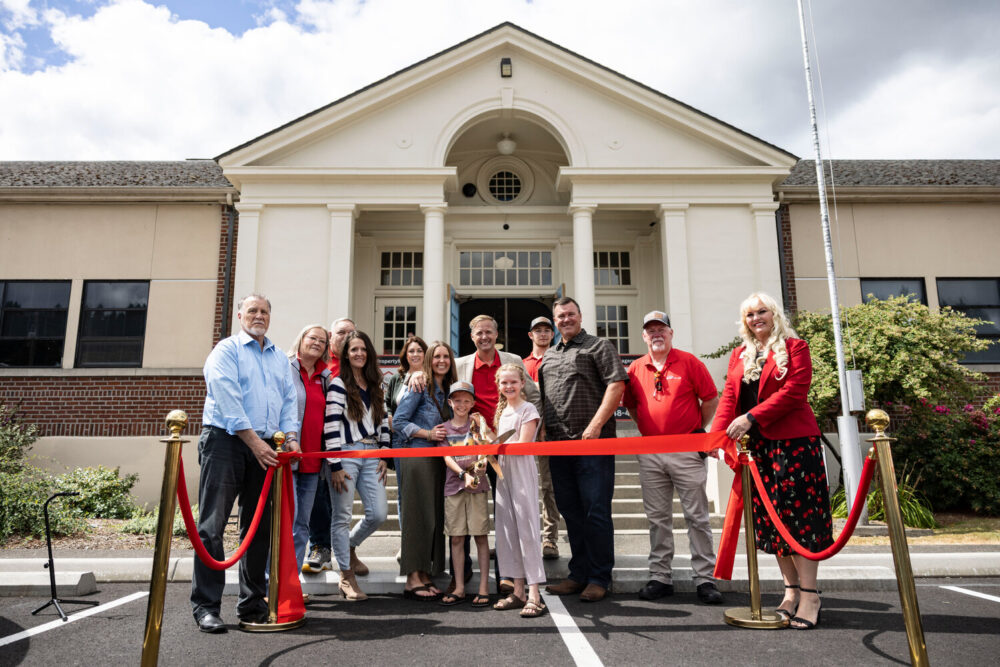
Photo: Chehalis Mayor Tony Ketchum, employees and family of project developer Northwest Property Managers, and Centralia-Chehalis Chamber of Commerce Ambassador Christine Brower at the opening of the Cascade Apartments complex in August 2025. Photo courtesy of the Centralia Chronicle.