
A Preservation Opportunity: Bring Back the Corner Store
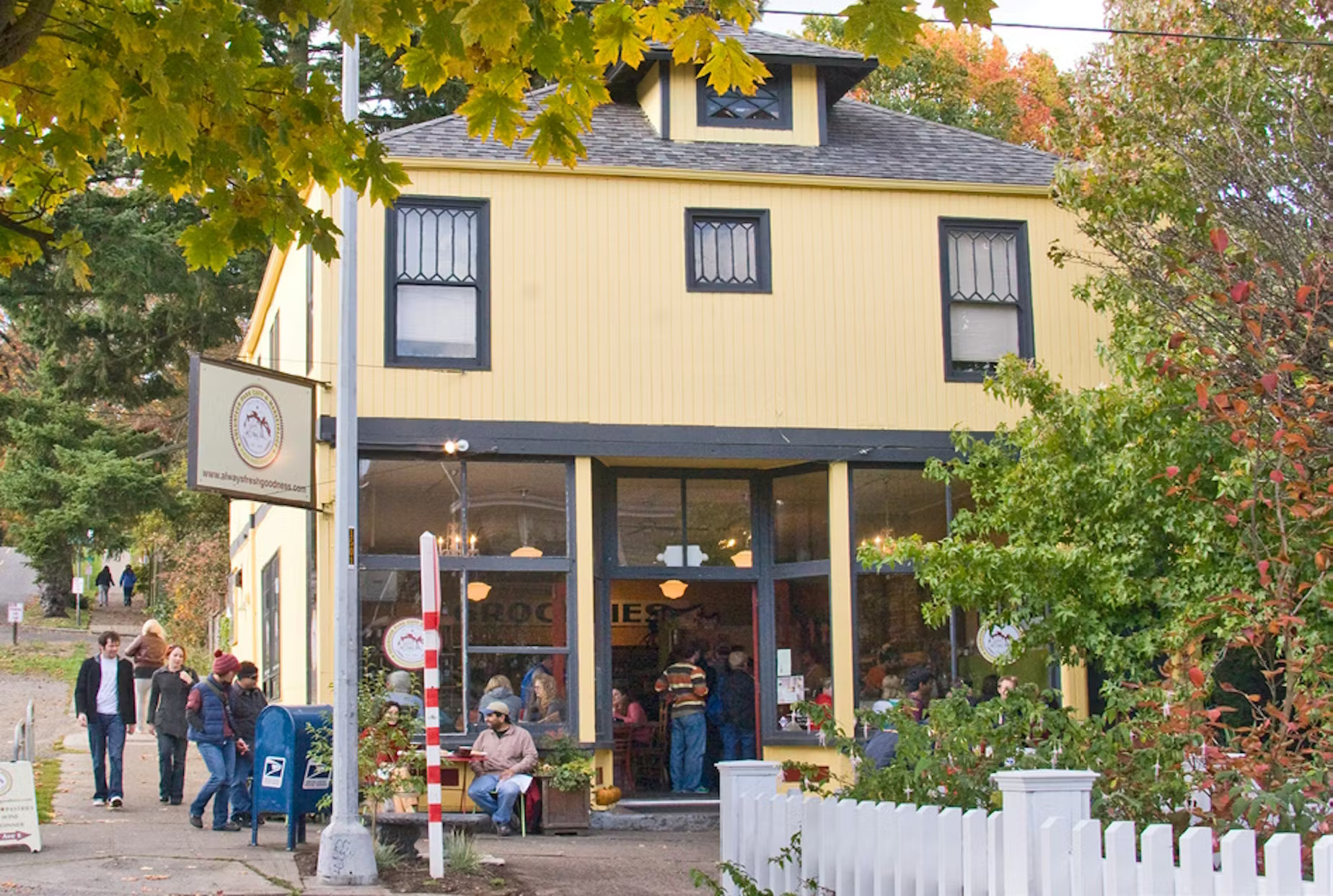
Photo: The Volunteer Park Cafe in Seattle. Photo courtesy of KUOW.
By Harriet Wright, University of Washington
Our PLACES’ Advancing Leaders (PALs) Program provides funding for students and young professionals to attend our annual PLACES conference and then write an article about what they learned as an attendee (or other relevant topic). Look out for articles from our PALs online at preservewa.org/pals-articles.
I attended the 2025 PLACES Conference as part of the PLACES’ Advancing Leaders program, hoping it would deepen my understanding of preservation policy as a Master of Urban Planning student at the University of Washington. Beginning with the keynote, the conference reframed preservation for me not as a regulatory obstacle but as a form of economic development. Conversations with practitioners from towns across Washington revealed a shared concern: historic buildings are often most vulnerable in places where zoning and market pressures favor demolition over reuse. PLACES emphasized that preservationists must respond creatively, learning from policy experiments and from one another, to meet these pressures head-on. One such opportunity lies in a familiar but largely overlooked building type: the corner store.
In early America, corner stores served as neighborhood anchors: walkable points of daily commerce, informal gathering spaces, and extensions of community life. Their decline coincided with the rise of exclusionary zoning. Like in many U.S. cities, Seattle’s 1923 zoning code1 formally separated residential and commercial uses, leading to the disappearance of corner stores into residential housing.
Recent policy debates suggest a renewed opportunity. The Washington State Legislature’s House Bill 1175 (2025)2, though not adopted, would have required cities to permit small “neighborhood stores” in residential zones. In Spokane, an existing pilot code allows properties that historically had a commercial use to resume commercial uses3. Seattle’s proposed zoning updates would enable restaurants, cafés, daycares, or convenience retail on residential corner lots under 2,500 square feet4. This shift toward mixed-use zoning intersects with broader upzoning proposals for increased housing capacity statewide, raising concerns that older buildings could be demolished for mixed-use and/or higher-density purposes. This article aims to use Seattle as an example to show how corner store policy could become a blueprint for how preservation, economic development, and equity can support one another.
To extend Spokane’s pilot code, Seattle should define eligible corner-lot sites to include any corner-lot structure older than 50 years, not just those that historically operated commercially. Expanding eligibility recognizes that older corner-lot buildings hold cultural, architectural, and economic value. These often overlooked structures face disproportionate demolition pressure. Additionally, because commercial rents are prohibitively high, many emerging entrepreneurs cannot access suitable small-scale retail space. Increasing eligible properties would allow for small businesses to able to find rental space.
As preservationists, our job is to think of creative solutions to combine modern planning policy with historic preservation. Below, I propose tools to encourage corner lot property owners to maintain their historic structures when thinking about developing a corner store on their lot.
- Extension of the Special Valuation Tax program, a 10-year property tax reduction for improvements to include retrofits of corner-lot structures even if they are not formally designated as historic buildings.
- Publication of a design toolkit for historically compatible storefront conversions, drawing from existing Washington State Main Street Program revitalization resources to help property owners navigate sensitive retrofits.
- Creation of a dedicated adaptive reuse permit pathway to reduce permitting time and uncertainty for small property owners (modeled on an existing program in Bellingham5).
In this work, the question is not only what is preserved but who benefits. Corner-store policy can align with equity initiatives by pairing preservation with wealth-building tools for marginalized entrepreneurs. Programs such as Seattle’s Business Community Ownership Fund6 acquires real estate to secure stable rents for BIPOC and immigrant business owners. In a preliminary GIS analysis of Seattle’s historically black Cherry Hill neighborhood, I identified at least 38 properties that could qualify under my proposed framework. These properties represent opportunities to stabilize vulnerable communities, return displaced entrepreneurs to their neighborhoods, and bring historic buildings back into productive use.
Layering multiple incentives and policies into a property creates a realistic economic path forward which allows historic properties to serve as platforms for economic mobility. Without preservation-based incentives, neighborhoods risk generic building infill and continued community displacement. Through coordinated tax relief, guided design examples, and adaptive reuse pathways, corner stores can again become catalysts for cultural continuity, neighborhood resilience, and inclusive economic development.
1. https://www.seattle.gov/cityarchives/search-collections/research-tips-and-tools/researching-land-use-and-zoning
2. https://app.leg.wa.gov/billsummary?BillNumber=1175&Year=2025&Initiative=false
3. https://my.spokanecity.org/projects/activate-existing-neighborhood-commercial-structures/
4. https://www.seattle.gov/documents/departments/opcd/seattleplan/updatingneighborhoodresidentialzoning.pdf
5. https://cob.org/services/planning/historic/incentives
6. https://www.seattle.gov/economic-development/grants-and-funding/business-community-ownership-fund
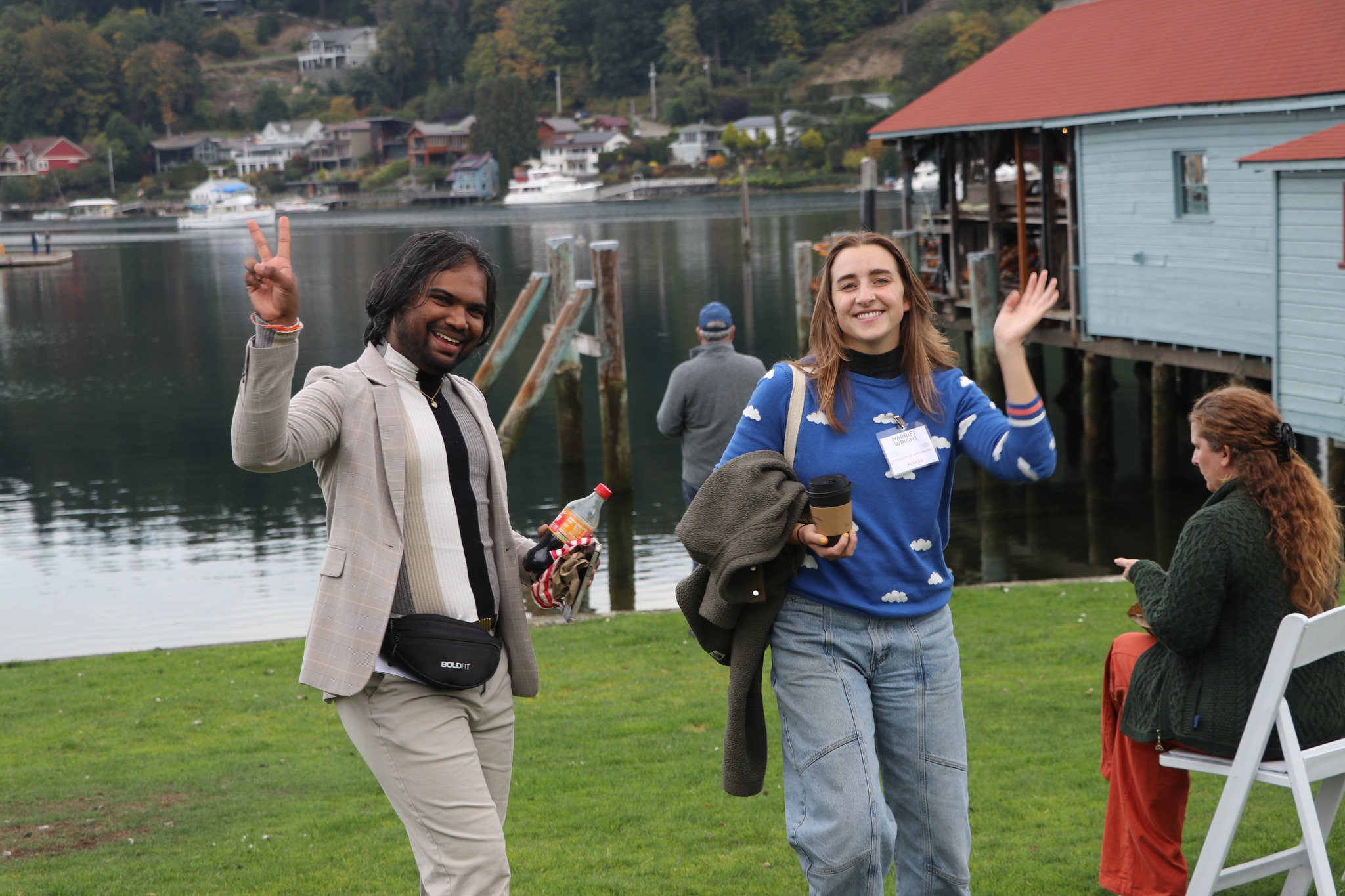
Above: Harriet Wright (right) and fellow PAL Prathamesh Bange say hello at the PLACES Conference in Gig Harbor in October 2025.