
Advocacy Alert: Federal Government Proposes New Regulations for Nonprofit Grantees
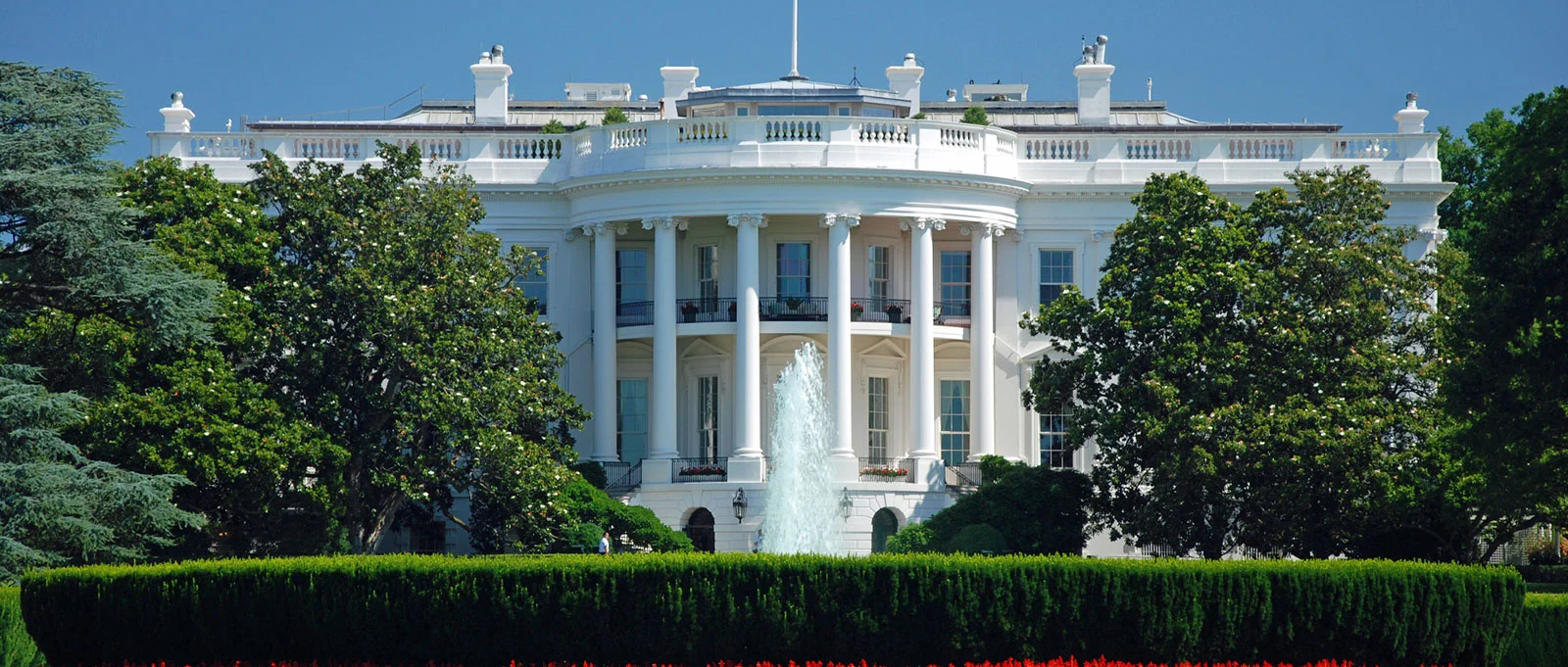
On May 29, the White House Office of Management and Budget (OMB) issued “Regulation for Federal Financial Assistance,” which proposes revisions to the standardized framework (commonly referred to as the “Uniform Guidance,” implemented in 2013) used to manage federal grants, cooperative agreements, and other forms of federal financial assistance. The proposed changes—which are tantamount to “revising the entirety of federal grantmaking and federal cooperative agreements in America,” in the words of the American Physical Society—will impact $1.1 trillion in federal grants across various sectors, particularly the nonprofit sector.
OMB’s proposed revisions codify a number of the Trump Administration’s 2025 executive orders, in particular Executive Order 14332, “Improving Oversight of Federal Grantmaking” (issued August 7, 2025), along with other orders which address diversity, equity, and inclusion (DEI) programs, gender ideology, and immigrant community services.
The “Regulation for Federal Financial Assistance” document itself is 100 pages long, but some of the biggest changes proposed include:
- Political appointees within federal agencies would be empowered to decide on grant funding. These appointees would conduct pre-issuance reviews of all discretionary grants to ensure that such grants “demonstrably advance the President’s policy priorities.” Peer review recommendations would be relegated to an “advisory” role only. Not only would this new administrative layer backlog and delay funding to grantees, it would also allow an unprecedented level of political control over what projects and organizations get funded.
- Federal agencies would be able to withhold, suspend, or terminate grants at any time. Federal grants could be terminated (again, possibly by political appointees) if it is determined that the grantee or grant project “does not effectuate program goals, Federal agency priorities, or the national interest as they exist at the time of the termination.” Furthermore, the agency would not be required to provide a detailed analysis of why the grant was terminated.
- Pass-through entities would be more closely monitored to control where funding is allocated; subrecipient projects must be evaluated for reputational damage that could be caused. Pass-through entities (like the Washington Trust, which is distributing Paul Bruhn Historic Revitalization Grant funds to projects across Washington State through our Coastal Preservation & Adaptation for Rural Communities, or CPARC, Program) would be required to ensure not only that all subrecipients are in compliance with subaward terms and conditions, but that a subrecipient “does not take actions that could significantly damage the reputation” of the pass-through entity, federal funding agency, or federal government—though examples of what this could look like are not provided. If subrecipients are deemed to have taken such damaging actions, or if a pass-through entity fails to report such an instance, the overall grant may be terminated.
Make Your Voice Heard
OMB has offered a public comment period of only 45 days, with comments due by July 13, 2026. The agency further proposes that these changes go into effect on October 1, 2026, at the start of federal fiscal year 2027.
We at the Washington Trust join with colleagues across the nonprofit sector in expressing concern over these new regulations, which will change the landscape of federal funding as we know it and has the potential to severely impact the organizations and projects allocated funding. We invite you to make your voice heard by signing on to a national letter opposing the proposed changes, by filling out a form on the National Council of Nonprofits website.
Further Reading:
- Forbes magazine, “The New Trump OMB Rule: Organizations And The Public Raise Concerns,” July 5, 2026.
- Alliance for Justice, “Federal Funding: The OMB Rule Proposal That’s Got Nonprofits Talking,” June 11, 2026.
- Ropes & Gray, “OMB Proposed Revisions to the Uniform Guidance: Key Takeaways for Award Recipient Organizations,” June 2, 2026.