
Washington Main Street: Belonging Barometer Project
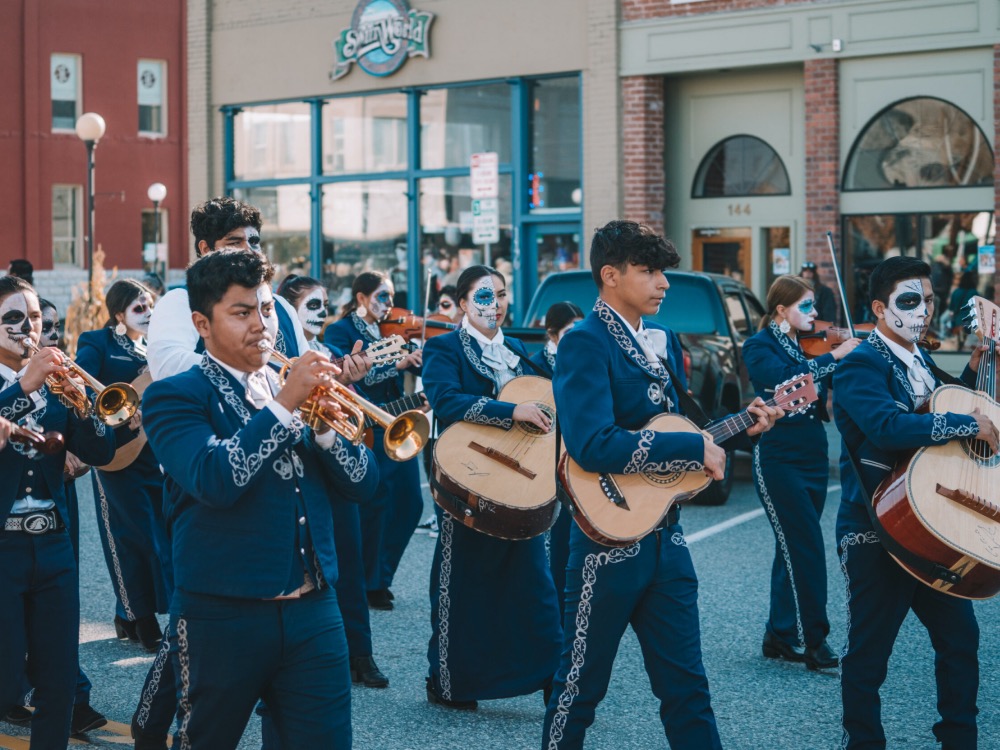
Photo: Chelan’s Dia de los Muertos event celebrates Latinx culture with a parade, dancing, and singing. Photo courtesy of the Historic Downtown Chelan Association.
Washington Main Street’s Main Street Representation & Belonging Research Internship was made possible through the Washington State Historical Society’s Diversity in Local History Internship Program. Thank you! The Washington State Main Street Program is a program of the Washington State Department of Archaeology and Historic Preservation, managed by the Washington Trust for Historic Preservation.
By Liz Arias, Main Street Representation & Belonging Research Intern
What makes downtown feel like home? Is it the familiar faces at the farmers’ market? The comfort of seeing your culture reflected in storefronts and events? Or simply knowing you have a seat at the table when decisions are made?
These questions drove the Washington State Main Street Program’s 2025 Belonging Barometer Project, a six-month study measuring how effectively our downtowns increase a sense of belonging for downtown stakeholders. After identifying four communities to participate in the project—Chehalis, Ellensburg, Mount Vernon, and Wenatchee—we partnered with Main Street America to administer an online survey using the Belonging Barometer framework created by the American Immigration Council. We then conducted one-on-one interviews with 16 residents and stakeholders to get their individual perspectives on belonging. Lastly, I worked to synthesize the survey data, interview responses, and additional research into a final report. In analyzing the results, we discovered both heartening successes and critical opportunities to deepen community connections.
Belonging, as defined by the American Immigration Council, is about the quality of fit between oneself and a group or place—feeling emotionally connected, welcomed, and valued for your authentic self. It means having the freedom to share your opinions, even when they differ, and having the power to influence decisions. When we embrace the belief that everyone has the right to belong, regardless of identity or background, we can build more equitable communities.
Our research confirms that true belonging in public spaces like downtowns is multifaceted. It goes beyond tolerance—it’s about knowing that you’re valued, that your voice matters, and that your needs shape shared spaces. As Mount Vernon resident Jeff McInnis noted, “Good accessibility design doesn’t just remove barriers for some; it creates a better experience for all.” This principle reflects how intentional design can foster belonging for everyone.
Belonging is more than a social ideal. It is a fundamental human need with profound implications for physical health, psychological well-being, and societal stability. Research shows that when people feel connected and valued, they experience lower stress, better health, and longer lives—factors that directly impact workforce stability and productivity. Economically, belonging reduces turnover, boosts innovation, and strengthens local businesses. Socially, it builds civic engagement and trust between local residents, creating more cohesive and resilient communities. For downtown revitalization, fostering belonging is a strategic advantage, turning public spaces into thriving hubs where people want to live, work, and invest.
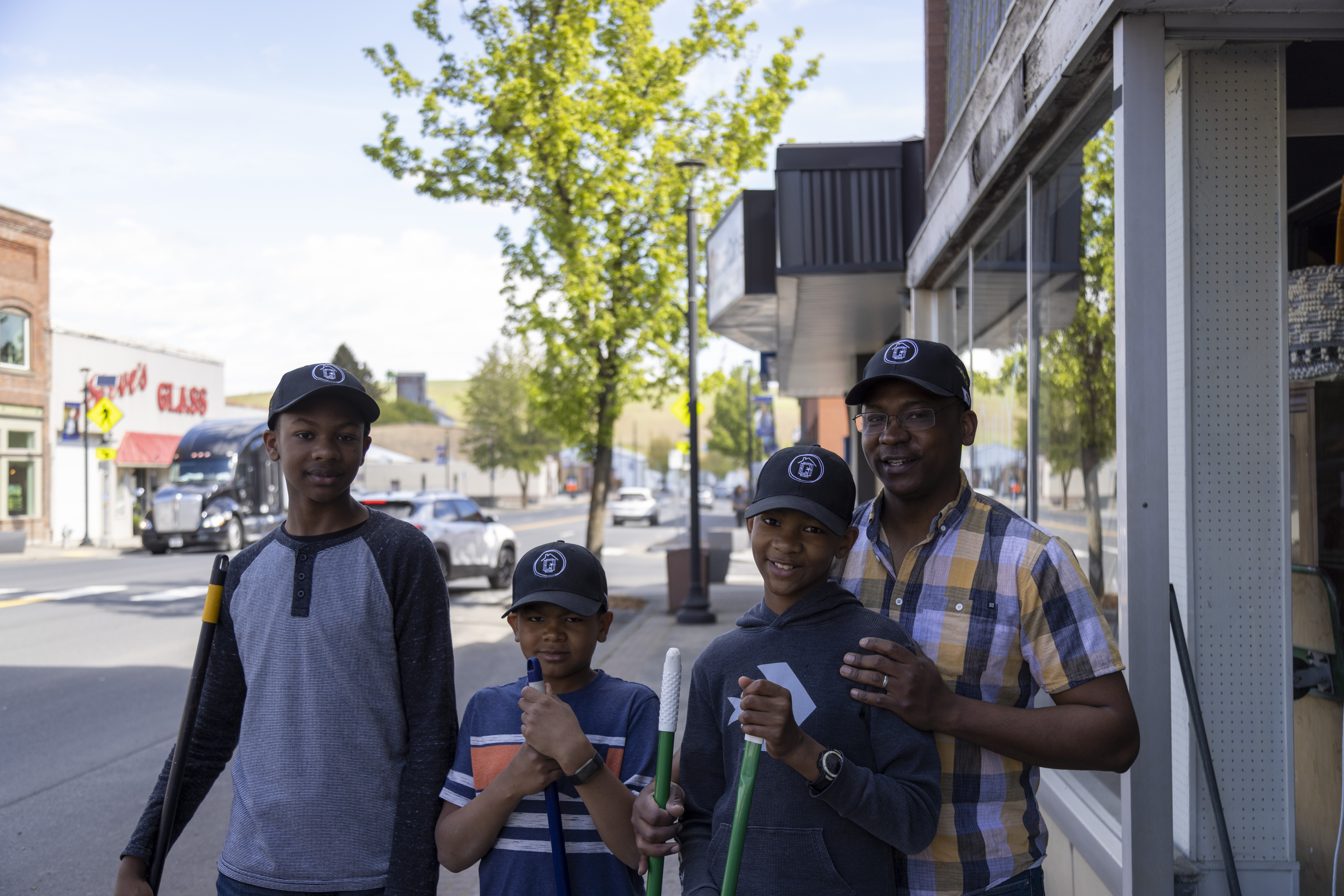
Volunteering with a Main Street organization can increase residents’ sense of belonging (and provide learning experiences for the kids too). Photo courtesy of the Colfax Downtown Association.
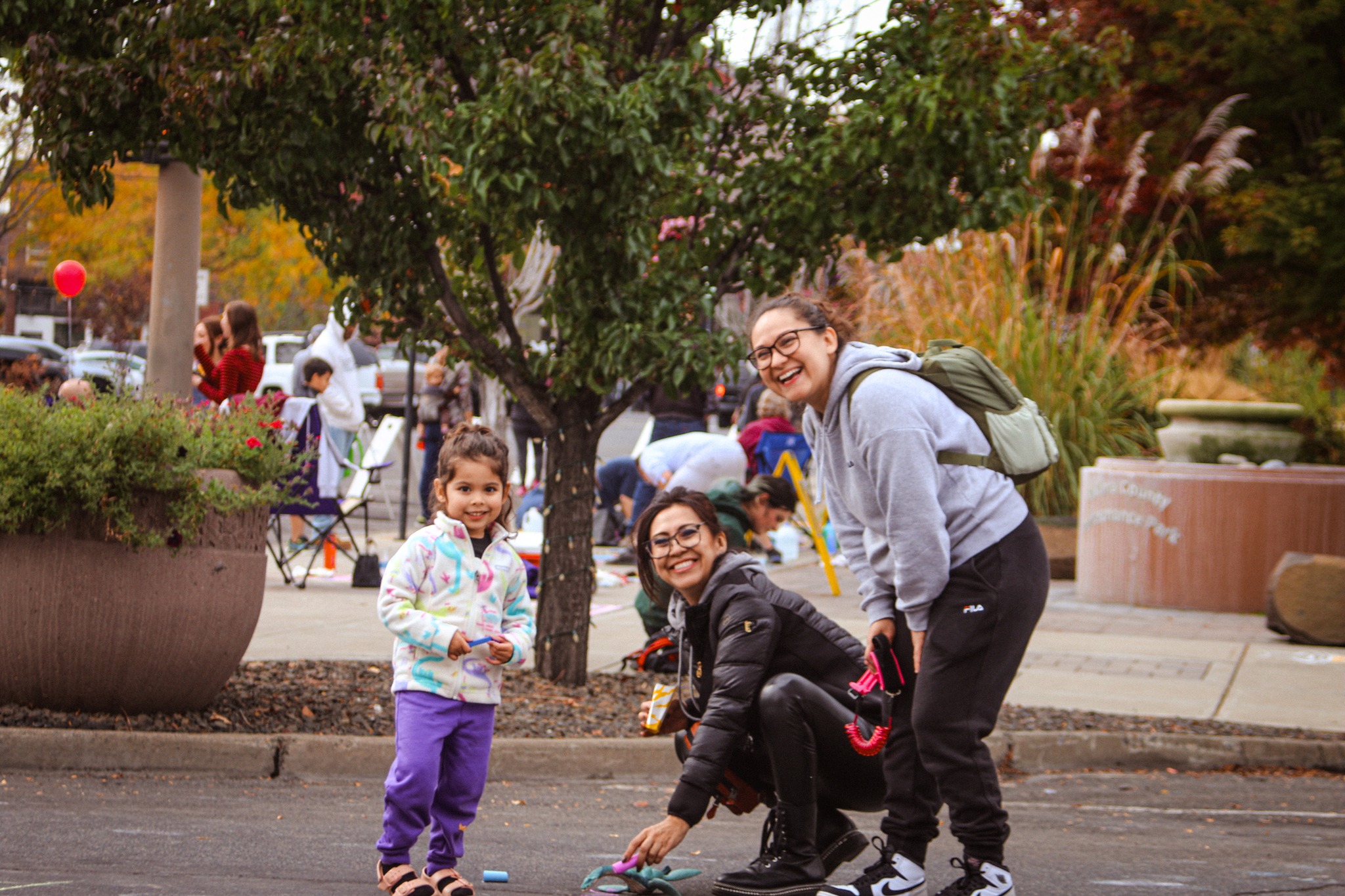
Yakima’s Chalk Art Festival offers a low-cost option for family-friendly fun. Photo courtesy of the Downtown Association of Yakima.
The Main Street Effect
Established Main Street organizations significantly boost a community’s sense of belonging. Our data shows that residents involved with Main Street programs report 10% to 15% higher belonging scores than unaffiliated peers. The reason? Main Streets excel at relationship-building and curating shared experiences, like Mount Vernon’s Tulip Festival or Ellensburg’s Buskers in the Burg, experiences that evolve into multigenerational traditions, seamlessly integrating newcomers into the fabric of the community.
These events act as the living heartbeat of downtown belonging, fostering a collective identity through festivals, markets, and traditions. Shared memories from these gatherings bond people to place and to each other. In fact, 81% of interviewees cited Main Street-hosted events as their most cherished downtown memories, proving their role as essential anchors of belonging.
Beyond events, Washington’s Main Streets serve as laboratories for innovation, tackling unique community needs with creative solutions, from inclusive public spaces to sensory-friendly programming for neurodiverse families. Their work bridges systemic gaps through adaptable, scalable experiments that strengthen downtowns.
Ultimately, the “Main Street Effect” is the culmination of events, grants, public art, and problem-solving, all working together to create places where people love to gather, connect, and belong.
Gaps in Belonging
While older residents report moderate connections to downtown, youth and parents face significant barriers—limited gathering spaces, restrictive business hours, and few low-cost engagement opportunities. Since young people often lack disposable income, they’re frequently overlooked as place stewards. Yet engaging them is critical: they’re the future decisionmakers who will choose whether to stay in or leave their hometowns. Investing in youth, especially amid rising mental health challenges, can empower them as active co-creators of inclusive downtowns.
Accessibility remains a persistent challenge. Survey respondents with disabilities reported the lowest belonging scores across all four cities, citing inadequate ADA parking, obstructed pathways, and even social stigma toward those who mask at public events. These physical and social barriers exclude entire communities from downtown life.
Historical segregation compounds these gaps. Washington cities rank among America’s most racially divided, perpetuating systems at odds with Main Street’s mission of inclusive placemaking. Native respondents, for instance, described ambiguous belonging in downtowns, where the near absence of Tribal cultural centers or Native-owned businesses reinforces exclusion.
Main Streets have always been pillars of community connection. Now it’s time to expand that legacy by building downtowns where no one feels ambiguous about their belonging. Addressing these gaps through intentional design, inclusive programming, and community partnership is how we transform downtowns from places of exclusion to engines of belonging and economic resilience.
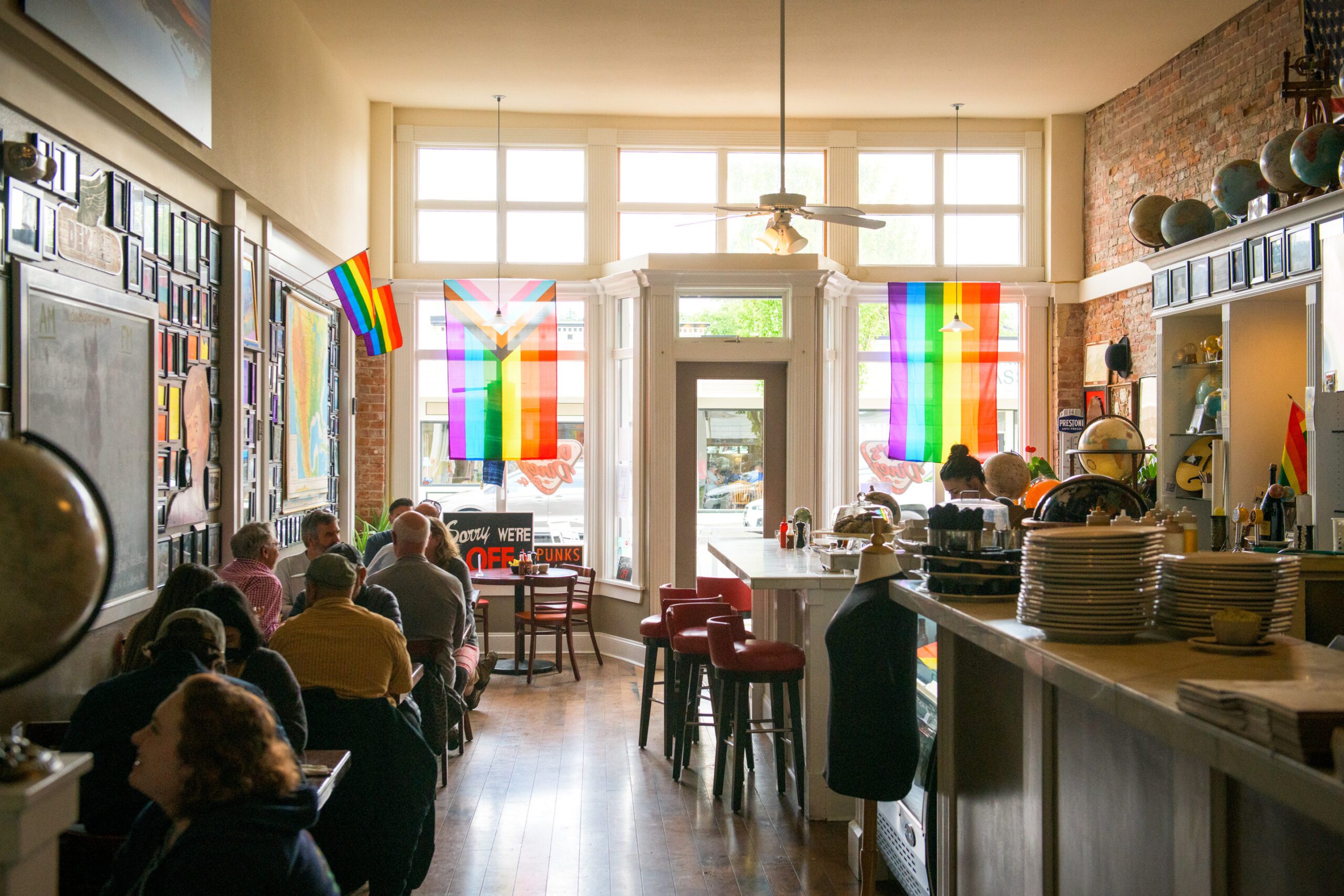
Small businesses can use signage and decor to bolster inclusivity, as in this restaurant in downtown Anacortes. Photo courtesy of the Downtown Anacortes Alliance.
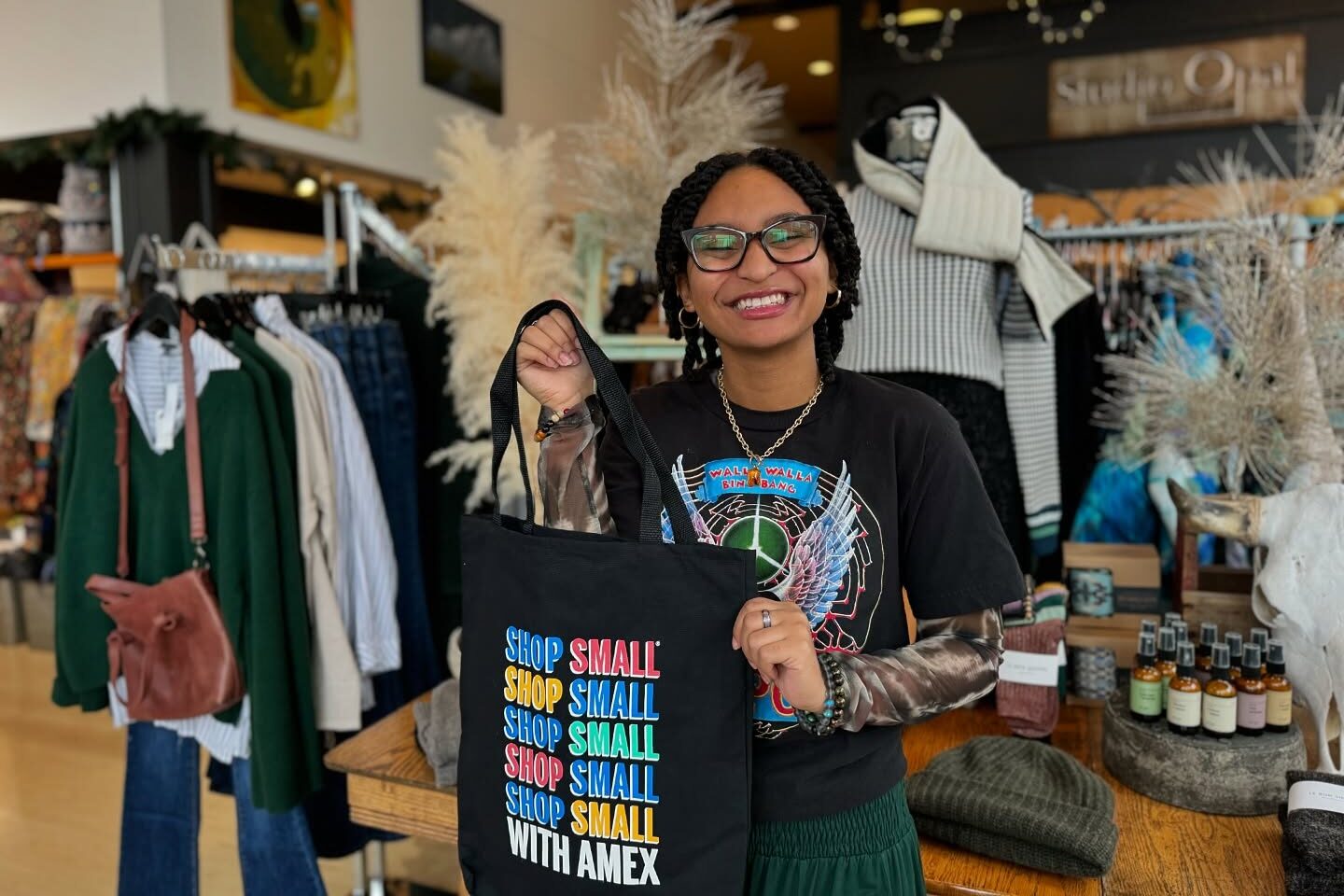
Small business owners can also affect (and be affected by) their community’s sense of belonging and inclusivity. Photo courtesy of the Downtown Walla Walla Foundation.
Built to Belong
Main Street has always been about people—the connections we build, the spaces we share, and the feeling that downtown is a place where everyone can find belonging. Belonging takes shape through intentional design, through programs that invite participation, and through policies that make room for all voices to be heard. Change happens in the details—a bench placed thoughtfully, a business owner improving accessibility, a festival that brings generations together. These moments create the foundation of a downtown that serves and includes people. When Main Streets approach their work with openness and imagination, they build vibrant communities where belonging grows naturally.