
Walla Walla’s Forgotten Chinatown
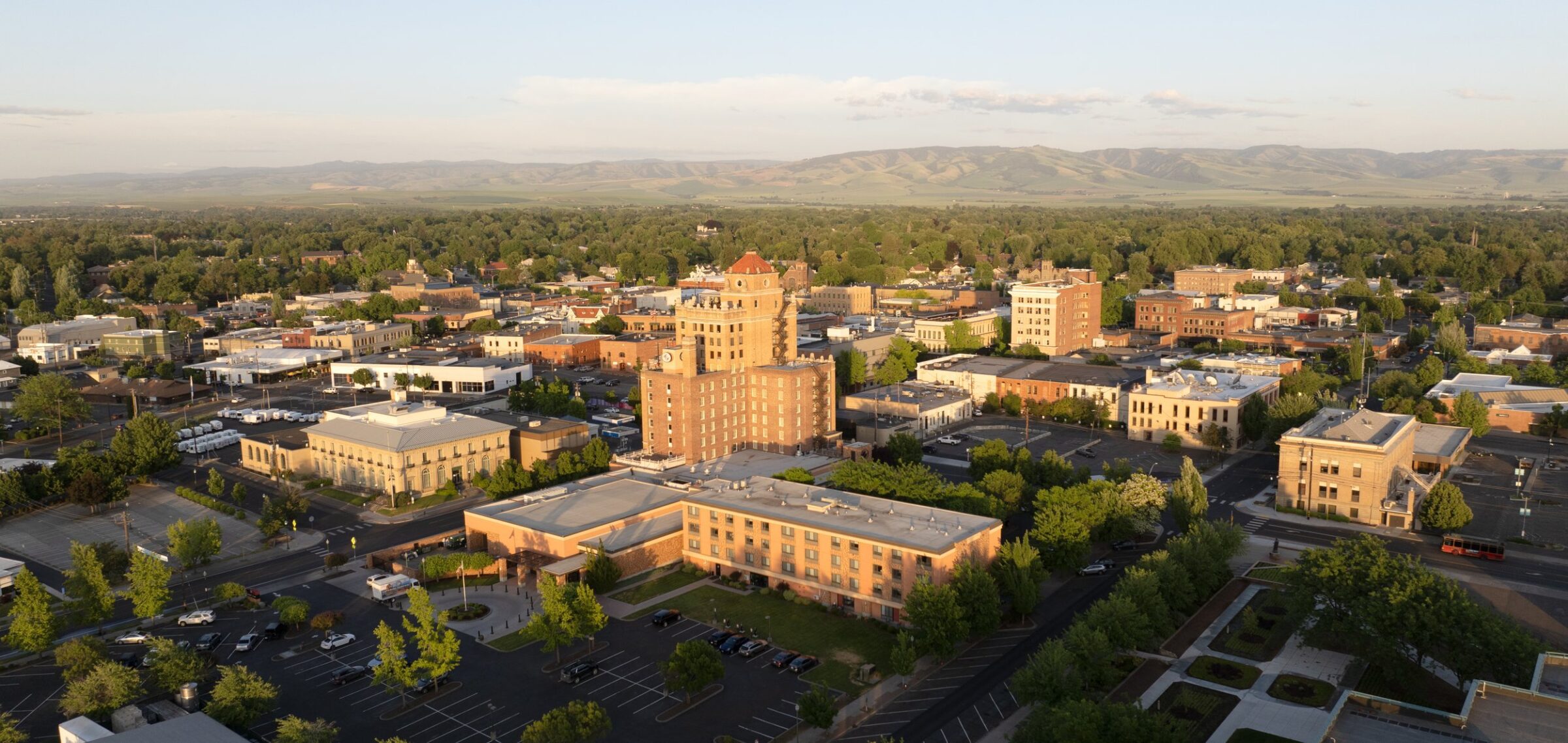
Photo: Downtown Walla Walla in southeastern Washington. Photo courtesy of Little Theatre of Walla Walla.
By Uma Bratt, Whitman College
Our PLACES’ Advancing Leaders (PALs) Program provides funding for students and young professionals to attend our annual PLACES conference and then write an article about what they learned as an attendee (or other relevant topic). Look out for articles from our 2024 PALs in this year’s issues of This Place and online at preservewa.org/pals-articles.
In October 2024, PLACES brought hundreds of historic preservationists to the Marcus Whitman Hotel in Walla Walla, situated in the heart of Walla Walla’s historic downtown district. During the last day of the conference, I listened to Jennifer Karson Engum from the Tamastslikt Cultural Institute describe Walla Walla as a place “not in the middle of nowhere, but the middle of somewhere, [she] just didn’t understand it yet.” For many in Walla Walla and other small towns, hidden histories, no matter how buried, have the capacity to carve connections and create physical belonging, revealing rich layers of heritage.
I am not a Walla Walla native. Similar to Engum’s experience, however, I feel that my understanding of Walla Walla subtly grows annually. Last summer, I interned with the City of Walla Walla’s Development Services department, knowing little about the greater area. A week into the job, I attended a meeting focused on the archaeological aspects of the 5th Avenue Bridge restoration and, after residing in the town for more than two years, spontaneously discovered the existence of a historic Chinatown district. As a Wasian (half-white/half-Asian) raised in Asia and western Washington, I’ve always been surrounded by diverse cultures. When I decided to attend Whitman College in Walla Walla, a town in which the population is three-quarters white, I accepted that I would be forgoing this connection to my heritage. I imagine this may be the origin of my fascination with Walla Walla’s historic Chinatown.
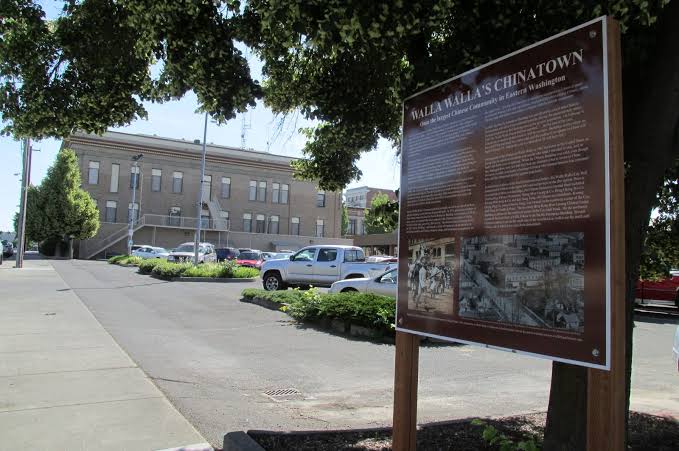
With the help of Walla Walla 2020 and the Northwest Archives, I learned about Walla Walla’s forgotten Chinatown. There are multiple accounts of when the first Chinese immigrants arrived in Walla Walla. Some say they were drawn to the valley by the Idaho gold rush in the 1860s. Others cite railroad construction in 1872. Regardless, Chinese settlers arrived in the wake of two significant anti-Asian laws: the Naturalization Act of 1870 and the Chinese Exclusion Act of 1882, which excluded Asians from the American naturalization process and prevented Chinese laborers from entering the United States. After completion of the Walla Walla-Wallowa railroad, many Chinese immigrants settled in the valley, opened businesses, or became truck farmers (small-scale, market-oriented farming that evaded prohibitions from owning land). By 1880, the town had the largest Chinese community in eastern Washington. Although the exact number of Chinese residents is highly contested, according to a local newspaper Walla Walla’s Chinese population at the time was comparable in size to Seattle’s. In 1907, Walla Walla was home to 23 recorded Chinese businesses, including 10 merchants, two druggists, one grocer, six laundries, one medicine manufacturer, and three restaurants.
What happened to Walla Walla’s Chinese community? A combination of events may have contributed to the drastic population change. For one, a building known as the Pacific Enterprise Building, which was built by prominent members and hosted many residents, was bought and closed by a non-Chinese businessman, dispersing the population. Despite the presence of a strong community, racism still thrived in eastern Washington. In 1887, in an event known as the Chinese Massacre, a group of men from Wallowa County shot more than 30 Chinese miners, tossing their bodies into the Snake River. According to a research paper written by Whitman College student Drew Ackerland, around three-quarters of the Chinese population left Walla Walla between the years 1900 and 1920—some returning to their homeland, others joining the larger community in Seattle.
Below: A newspaper clipping documenting the Chinese Massacre of 1887. Clipping courtesy of the Northwest Archives.
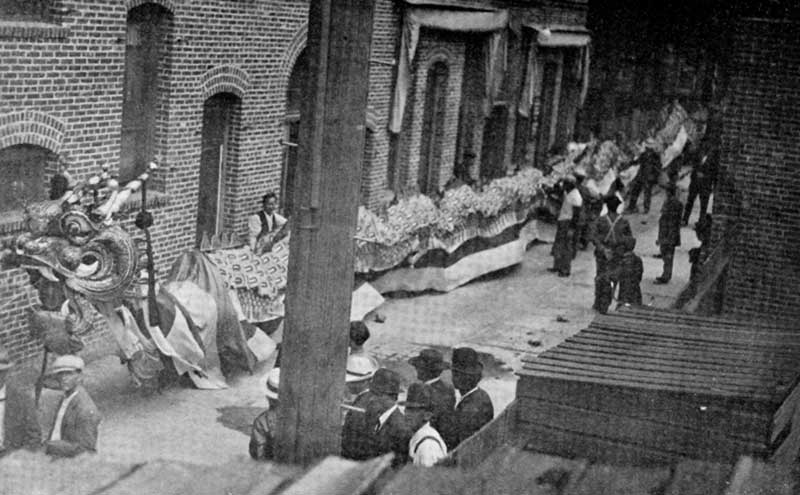
Little remains of Walla Walla’s historic Chinatown. Despite the lack of physical presence, excavating Walla Walla’s complex history revealed rich layers of heritage that transcended generations. After attending a predominantly white institution in a town so far removed from my background, I was drawn to the stories of those who struggled and succeeded in a setting not so different from my own. This demonstrates the need to preserve a key part of Asian American history in the Northwest, despite how racial demographics in Walla Walla have changed over time. By doing this, we can shift perceptions, transforming a place that seemingly resides in the middle of nowhere into one that cultivates and inspires communities.